A Guide to Women’s Open Water Wetsuits
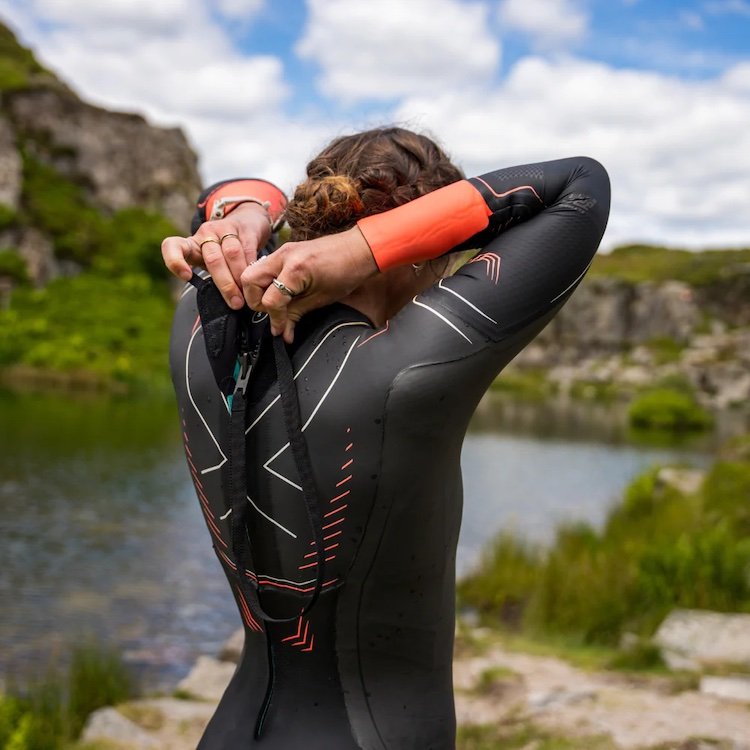
Choosing a wetsuit for open water swimming is less about finding the “best” suit and more about finding one that allows you to swim comfortably, confidently, and often.
I’ve tested a wide range of women’s open water and triathlon wetsuits over the years — racing in some, training long distances in others, and rejecting more than a few along the way. What I’ve learned is that fit, feel, and function matter far more than price or performance claims.
This guide is designed to help you understand how wetsuits work, what actually matters for open water swimming, and how to choose a suit that supports your swimming — not one you tolerate.
Do You Even Need a Wetsuit?
Before getting into models, it’s worth asking whether a wetsuit is necessary at all.
You may not need a wetsuit if:
The water is warm (generally above ~20°C / 68°F)
You are swimming short distances
You tend to overheat easily
Wetsuits are not required for your swim or race
A wetsuit becomes more useful when:
Water temperature drops
You’re swimming longer distances
You want added buoyancy for body position
You want insulation and safety margin in colder conditions
For many swimmers, a sleeveless wetsuit can be a good middle ground — offering warmth and buoyancy without restricting shoulder movement.
What Matters Most in a Women’s Open Water Wetsuit
1. Shoulder Mobility
Restricted shoulders are the fastest way to turn a swim into a frustrating experience. Look for flexible neoprene and paneling that allows full arm rotation without resistance.
2. Fit Through the Torso and Hips
Women’s suits vary widely in torso length and hip cut. A suit that fits your shoulders but pulls uncomfortably at the hips (or vice versa) will never feel right, no matter how advanced it claims to be.
3. Buoyancy Balance
More buoyancy is not always better. Excess lift — especially in the legs — can disrupt natural body position and stroke rhythm. The goal is balance, not flotation.
4. Neckline Comfort
Chafing around the neck is common and avoidable. A softer, lower-profile collar matters more than most people realize, especially for longer swims.
Common Wetsuit Mistakes to Avoid
Buying a suit that feels “almost right”
Choosing maximum buoyancy instead of comfort
Assuming higher price equals better fit
Ignoring overheating during longer swims
Keeping a suit that restricts breathing or shoulder rotation
If something feels wrong on land, it will feel worse in the water.
My Current Wetsuit Recommendations
I keep my recommendations intentionally limited. These are suits I’ve either used extensively myself or consistently see work well for women across a range of body types and swim goals.
Best All-Around Women’s Open Water Wetsuit - Zone3 Vanquish-X Women’s Wetsuit
This suit balances flexibility, warmth, and buoyancy without feeling overly aggressive. It’s a good choice for swimmers who want one wetsuit they can train and race in comfortably across a wide range of conditions.
Best Budget-Friendly Wetsuit - Zone3 Agile Wetsuit
If you want a traditional full wetsuit without committing to a high-end model, this is a sensible starting point. It offers warmth, buoyancy, and comfort for short to moderate-distance swims and is often where newer open water swimmers begin.
Sleeveless Alternative - TYR Hurricane Cat 5 Sleeveless
A sleeveless wetsuit can be a practical — and often more affordable — option if you want buoyancy and light insulation without shoulder restriction. This style works well in warmer water, during shoulder seasons, or for swimmers who simply dislike the feel of a full suit.
The TYR Hurricane Sleeveless is easy to swim in and frequently priced lower than full wetsuits, making it a good choice if you’re unsure how much coverage you actually need
Final Thoughts
A wetsuit should make open water swimming feel more accessible — not more complicated.
The right suit allows you to focus on your stroke, your breathing, and the experience of being in the water, rather than on constant adjustments or discomfort. Comfort, fit, and confidence matter more than marginal performance gains.
If you’re unsure between styles or sizes, err on the side of mobility and ease of use. A wetsuit you enjoy wearing will always serve you better than one chosen for theoretical advantages.
In future posts, I’ll share what I personally wear in different conditions — not as a prescription, but as a real-world reference point.