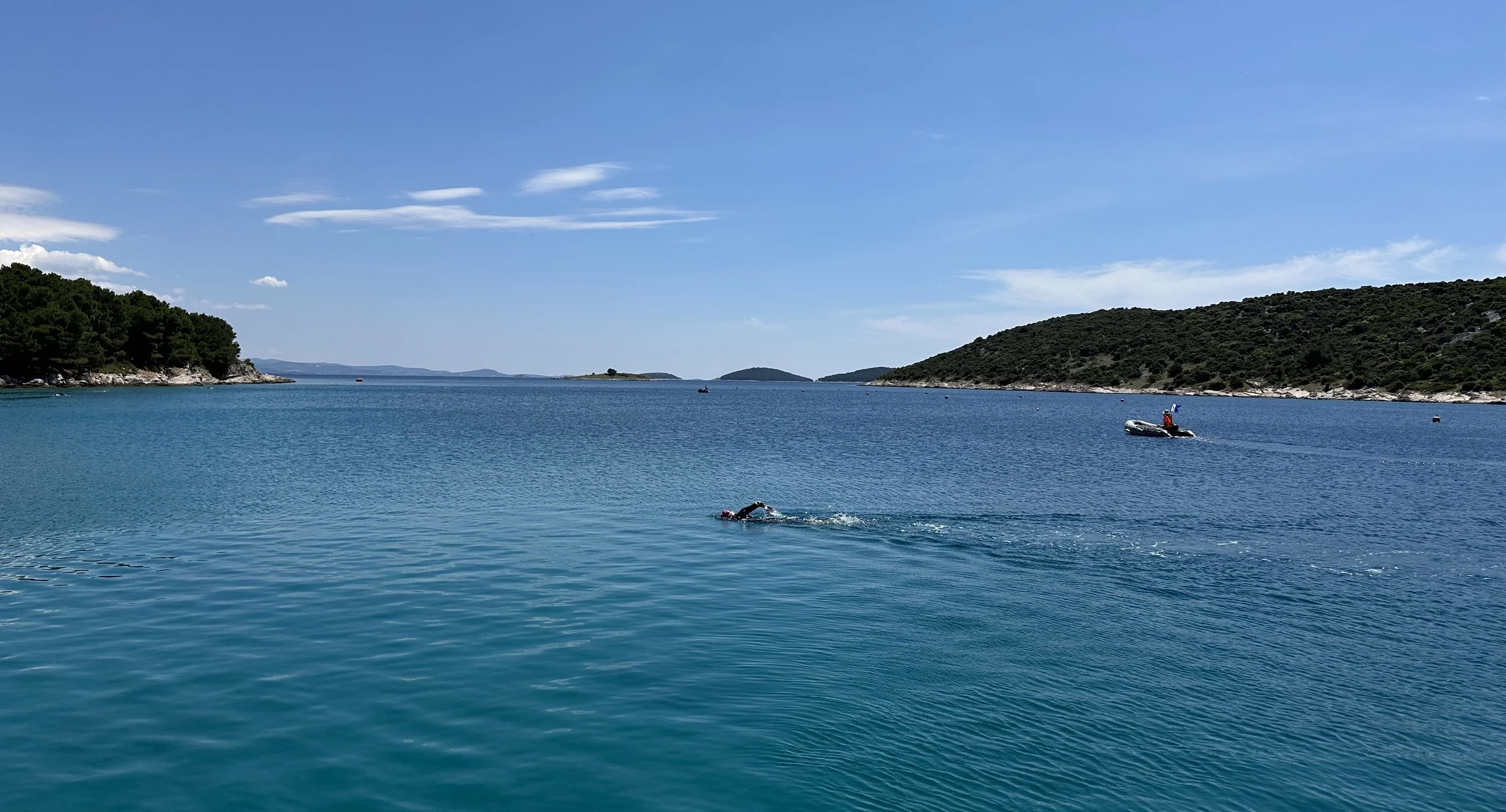
Pool training supports open water swimming, and it should be engaging and challenging in preparation for it.
This is not a list of everything you could use in the pool. It’s a short collection of tools I return to because they help me feel more connected, more aware, and more comfortable when I eventually swim outside. They help me improve technique in areas I need work and reinforce positive habits.
If a tool adds tension, distraction, or turns a swim into a checklist, I leave it out.
How I Think About Pool Tools
Tools don’t replicate open water. I use them to support a few key areas of my stroke that matter outside:
– body position
– feel for the water
– rhythm and balance
– strength
Most of my pool swims include at least one tool, depending on where I am in a training cycle.
The Tools I Actually Use
Pull Buoy - Arena Pull Kick II
Best for: body position, relaxed endurance, reducing leg fatigue.
A pull buoy is the most basic pool tool — and the one I use most consistently.
It helps me find a balanced body position without fighting sinking legs, which makes it easier to focus on breathing and stroke rhythm.
I like the Arena Pull Kick II because it’s simple, stable, and comfortable without forcing my legs unnaturally high (and it can be used as a kick board as well!).
This is the tool I reach for when I want a calm, steady swim that still feels productive.
Hand Paddles - FINIS Agility Paddles
Best for: clean hand entry, alignment, accountability.
These paddles only work if your hand enters the water correctly. There are no straps to hold them in place.
That makes them a useful accountability tool for short, focused sets. If your timing or alignment slips, the paddle slips too.
I really like these paddles. They reward quiet, controlled swimming, and make me feel strong in the water.
Finger Paddles - Arena Elite Finger Paddle
Best for: feel for the water, awareness at the front of the stroke.
Finger paddles are a great technique tool — precisely because they’re subtle.
They add just enough surface area to increase feedback without loading the shoulders or changing the stroke dramatically. If something feels off, you notice immediately.
I’ve had some challenges with hand entry, and these have provided fantastic feedback.
Snorkel - FINIS Swimmer’s Snorkel
Best for: removing breathing as a variable, staying present in the stroke.
A snorkel can be incredibly useful — or incredibly distracting — depending on how it’s used, and it takes some getting used to.
I don’t use it to avoid learning how to breathe. I use it to temporarily remove breathing so I can focus on balance, body line, and timing.
This is especially helpful during technique-focused swims and drills. I keep snorkel sets short and intentional. It’s a tool, not a crutch.
Ankle Band - Arena Ankle Band Pro
Best for: balance work, core connection.
This is the most advanced tool on this list. An ankle band removes the kick entirely and exposes imbalances quickly. It demands stability through the core and upper body. You can use it with a pull buoy, or for a real challenge, without. My band-only work is short and deliberate.
Improvised bands also work, but I’ve had trouble with them breaking or staying put which is why I prefer a purpose-built option when I do use one.
This isn’t a beginner tool, and it isn’t necessary for most swims. When I use it, it’s briefly and intentionally.
Tools I’ve Chosen Not to Use
Over the years, I’ve tried tools designed to force specific mechanics — including forearm fulcrums and similar devices.
In theory, they’re meant to teach early vertical forearm or “correct” catch position. In practice, I’ve found they often create tension, pull attention away from rhythm, and turn swimming into a series of corrections rather than a continuous movement.
That doesn’t mean they never work for anyone. They simply haven’t worked for me — or for many swimmers I know — and they don’t align with how I want swimming to feel.
If a tool makes movement more complicated instead of more intuitive, I leave it out.
A Note on Fins
Fins are actually a key training tool for me, and I use them in some form during almost every pool session.
They support body position, reduce strain when I’m tired, and allow me to focus on rhythm and timing (drill work!) without fighting the water.
That said, I’m still actively experimenting with different fin styles — lengths, stiffness, and shapes — to understand which ones best support my goals without changing the stroke in ways I don’t want.
Until I’m confident recommending a specific type, I’m intentionally leaving fins out of this guide.
When I do include them, it will be with the same restraint as everything else here.
Final Thoughts
Pool tools should support the swim — not dominate it.
The goal isn’t to collect equipment or optimize every session. It’s to create swims that feel calm, attentive, and repeatable, so when you return to open water, your body remembers how to move.
Some links on this site are affiliate links, which means I may earn a small commission at no additional cost to you. I only recommend products I personally use and trust.