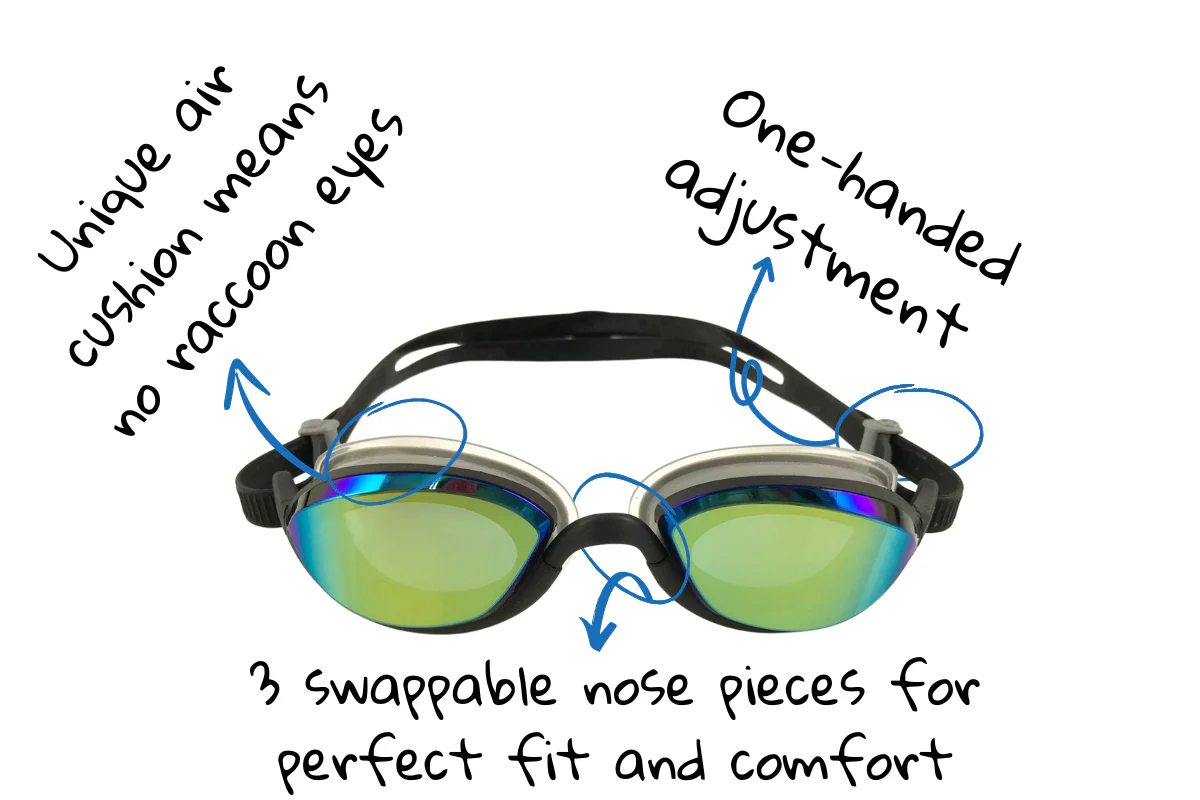
Goggles are one of the most personal pieces of swim gear. When they work, you forget they’re there. When they don’t, they can turn an otherwise good swim into a frustrating one.
For open water, the goal is reliability. That’s why the goggles I recommend for open water are the same ones I train in at the pool.
If they’re comfortable, stable, and clear in everyday training, they’re far more likely to perform when conditions are less predictable.
What Matters Most in Open Water Goggles
Before specific recommendations, a few fundamentals that matter more than brand names.
Fit Comes First
A good open water goggle should:
Seal comfortably without giving you a headache
Stay in place when you sight, breathe, or encounter chop
Feel familiar before race day
If you’re constantly adjusting them in the pool, they won’t magically improve outside.
Train in What You Swim In
Wearing your open water goggles during pool sessions:
Confirms long-term comfort
Exposes pressure points early
Builds familiarity so there are no surprises on race day
If goggles only come out on race morning, that’s a risk — not a shortcut.
My Go-To Goggles
These are the goggles I use consistently, in both pool training and open water swimming.
Snake & Pig Goggles — Primary Choice
These are my first choice for both training and racing.
Why they work:
Low-profile, secure fit that stays put in moving water
Comfortable seal for long sessions
Clear optics without unnecessary bulk
They’re simple, reliable, and don’t demand constant adjustment — exactly what you want when conditions aren’t controlled.
This is the pair I reach for most often.
Speedo Vanquisher — Secondary Option
The Speedo Vanquisher is a long-standing favorite for a reason.
Why it earns a place here:
Dependable fit across many face shapes
Easy to replace or find when traveling
Comes in many colors and tints
If Snake & Pig goggles don’t suit your face, Vanquishers are a solid, proven alternative.
A Note on Wide-Lens Goggles
Some open water swimmers prefer wide-lens or mask-style goggles for the increased peripheral vision they provide. For newer swimmers or those who value seeing more of their surroundings, this can feel reassuring.
That said, wide-lens goggles aren’t essential for confident open water swimming. Many experienced swimmers prefer a traditional goggle shape, finding it lighter, more stable, and less prone to distortion in changing light or choppy conditions.
If wide-lens goggles help you feel calmer in the water, they can be a reasonable option — but they’re not a requirement, and they’re not something I rely on personally.
Final Thoughts
The best open water goggles are the ones you trust — and trust comes from use, not novelty.
Train in the goggles you plan to swim in.
Let familiarity replace guesswork.
Choose comfort and consistency over constant upgrades.
When goggles earn their place in both training and open water, they stop being something you think about — and that’s exactly the point.